.jpg)
eBay vs PWCC vs Goldin: Where Are Cards Selling for More?
Cross-platform comp analysis · Mar 2026
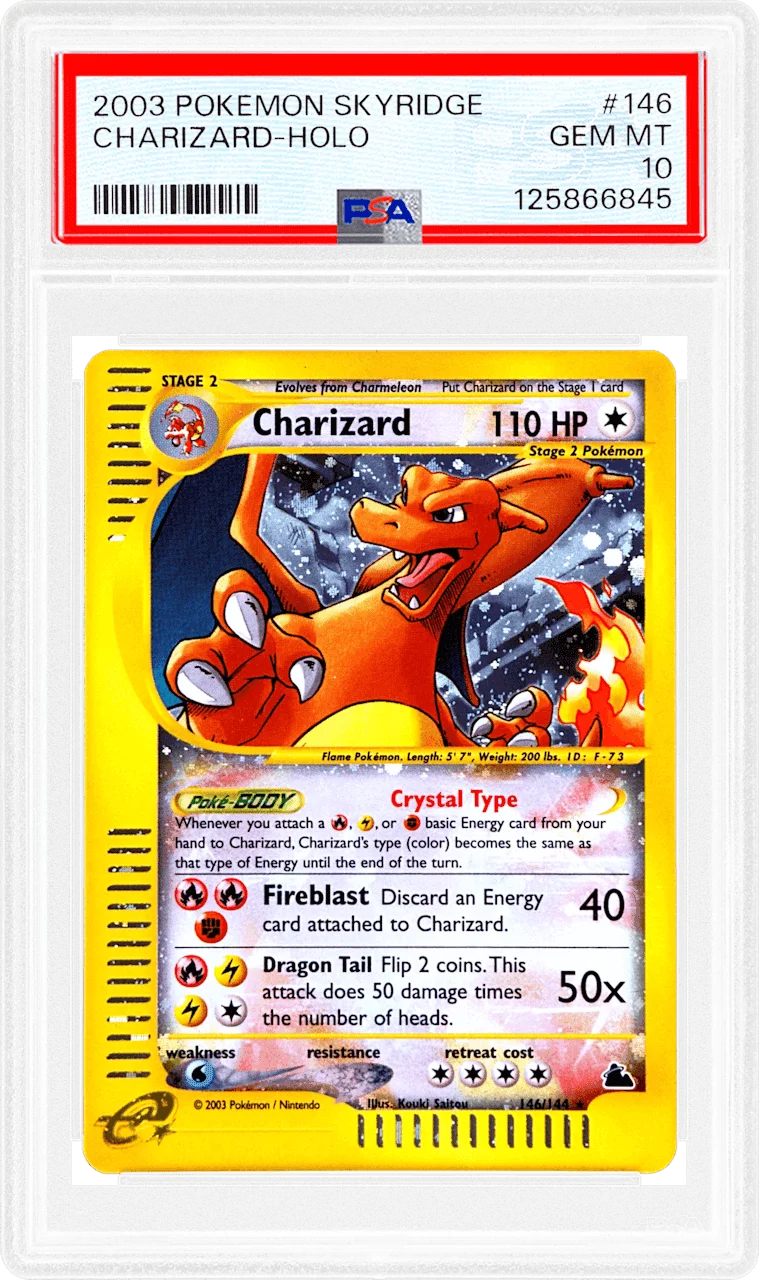
The question of where to sell a high-value Pokemon card is no longer trivial. Platform spreads have widened meaningfully across segments, and choosing the wrong venue can cost sellers thousands of dollars on a single transaction. Goldin dominates the trophy tier, where its Netflix visibility, live-stream production, and marketing gravity pull in the deepest pool of high-net-worth bidders. The February 2026 auction proved the point: 20 lots cleared six figures, with headline results like the $954K Charizard and $620K Legendary Collection case that might not have reached those levels on any other platform.
PWCC has carved out a strong position in the upper-mid tier, roughly the $1,000 to $50,000 range where serious collectors want clean auction mechanics, reliable grading verification, and repeatable comp discovery. PWCC's vault service and weekly auction cadence create a steady rhythm of comparable sales data that feeds back into market pricing. The platform charges buyer premiums in the 15 to 20% range, consistent with traditional auction houses, but its lower-friction consignment process and faster payout cycles make it the preferred channel for dealers rotating inventory.
eBay remains the undisputed volume king. With the largest selection of graded Pokemon singles on the internet, eBay handles more total transaction volume than Goldin and PWCC combined. Its seller fees hover around 13.25%, and while the platform lacks the prestige branding of a curated auction house, it offers unmatched velocity for mainstream graded singles in the sub-$1,000 range. Buy-It-Now listings, best-offer negotiation, and a global buyer base make eBay the default for sellers who prioritize speed over maximum realized price.
The emerging wildcard is Courtyard and other tokenized platforms, which bypass traditional fee structures entirely. Courtyard charges zero seller fees and offers instant settlement, which is beginning to pull liquidity away from eBay on high-turnover modern singles. For now, the tokenized platforms lack the buyer depth for true trophy material, but they are growing fast enough that serious sellers are starting to split inventory across onchain and traditional channels.
The practical takeaway is segmentation. Trophy cards above $50,000 belong at Goldin or Heritage, where marketing and buyer pool depth justify the premium fees. Upper-mid-tier slabs from $1K to $50K perform best at PWCC, where auction mechanics and data transparency attract informed buyers. Mainstream singles under $1K move fastest on eBay. And for high-frequency modern inventory rotation, tokenized platforms deserve a serious look. Platform arbitrage is a real edge in this market, and the sellers who understand where each card performs best will consistently outperform those who default to a single channel.